UX Transformation for Carbon Estimating at Scale

Benchmark: carbon estimating at scale

Client: Benchmark

Sector: cost and carbon estimating for infrastructure

Standard: PAS 2080

Services: UX research, UX/UI redesign, React design system, front-end development

Team: senior product strategist, lead UX and UI designers, producer, senior front-end developer

Summary

Vigo worked alongside Benchmark's in-house developers to redesign its carbon estimating application after a poorly received alpha. Observation sessions with estimating engineers shaped dense, high-contrast data tables and background processing for large tasks. Vigo delivered a React design system that let Benchmark's team rebuild and scale the interface within their existing stack.

Industry and context

Benchmark provides cost and carbon estimating to major infrastructure managers around the world, and licenses its software to engineering teams so they can do the same work in house. Its carbon work follows PAS 2080, the specification for managing carbon across infrastructure projects, where accurate reporting is expected rather than optional.

Benchmark’s carbon application, a standalone tool for measuring and reporting emissions, had reached alpha. User feedback was poor. The interface was cumbersome, the experience didn’t suit its expert audience, and design inefficiencies were slowing it down.

Understanding expert users

Benchmark brought Vigo in to work alongside its in-house development team, adding the specialist skills needed to redesign the application’s front end quickly, with a tight focus on usability and efficiency.

Research centred on extended observation sessions with estimating engineers. We watched them carry out real tasks and listened to them explain what they were doing and why.

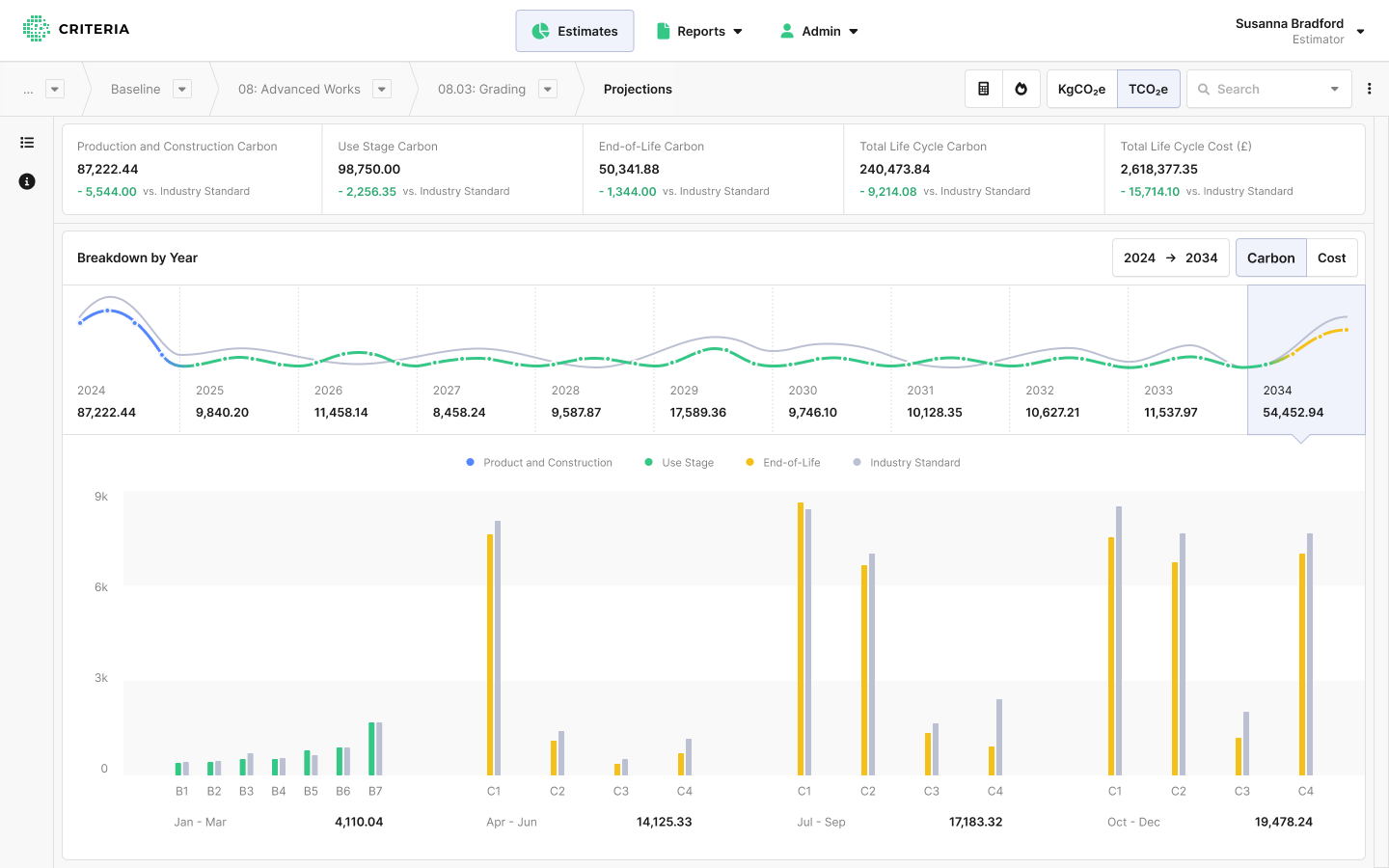
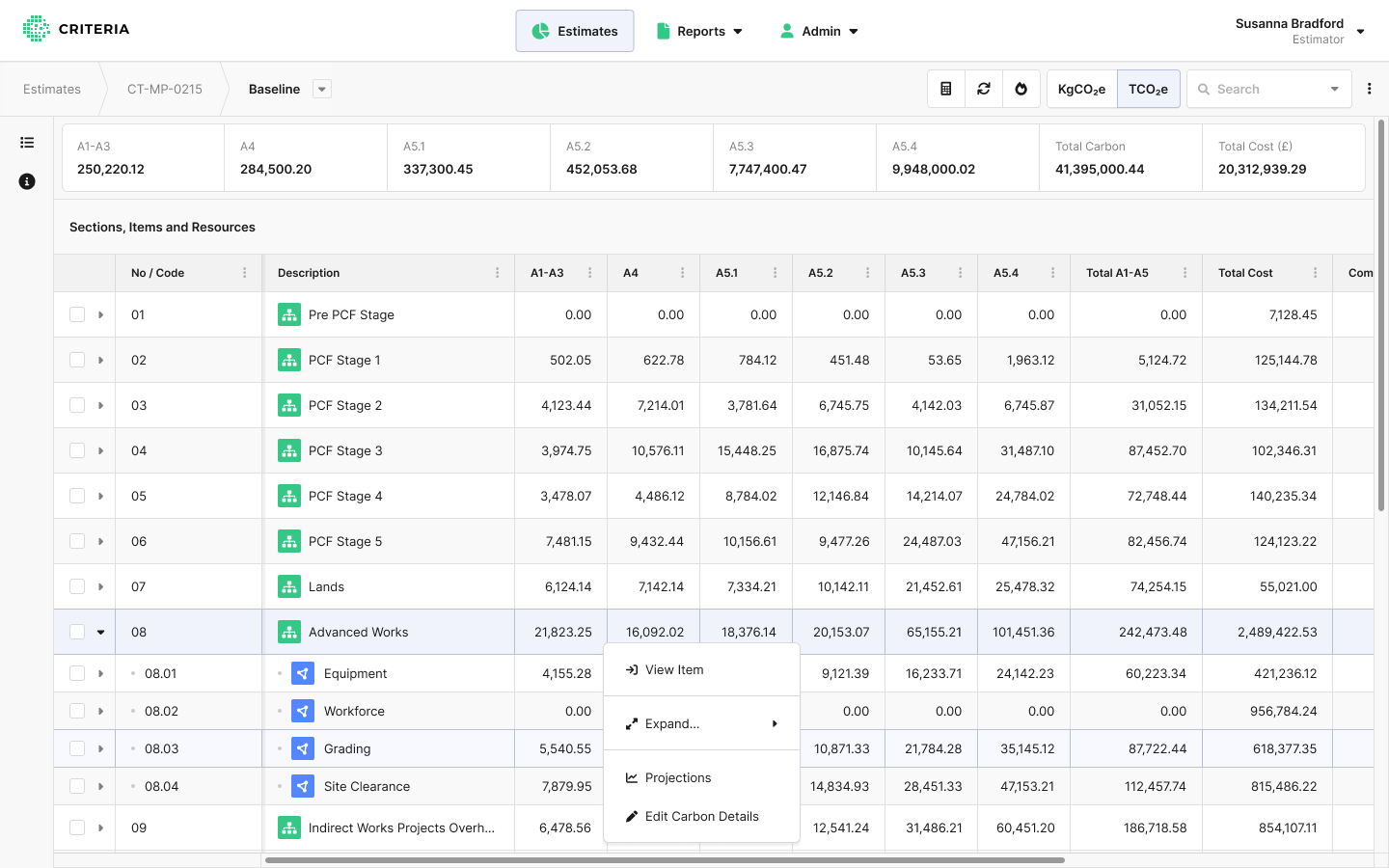
What we learned: this was not a consumer app and couldn’t be designed like one. Engineers needed dense data displays, as little scrolling as possible and precise interaction patterns built for repetitive, specialised work.

Designing for density and performance

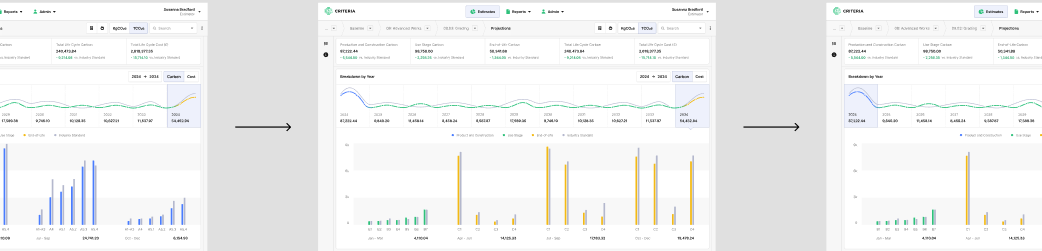
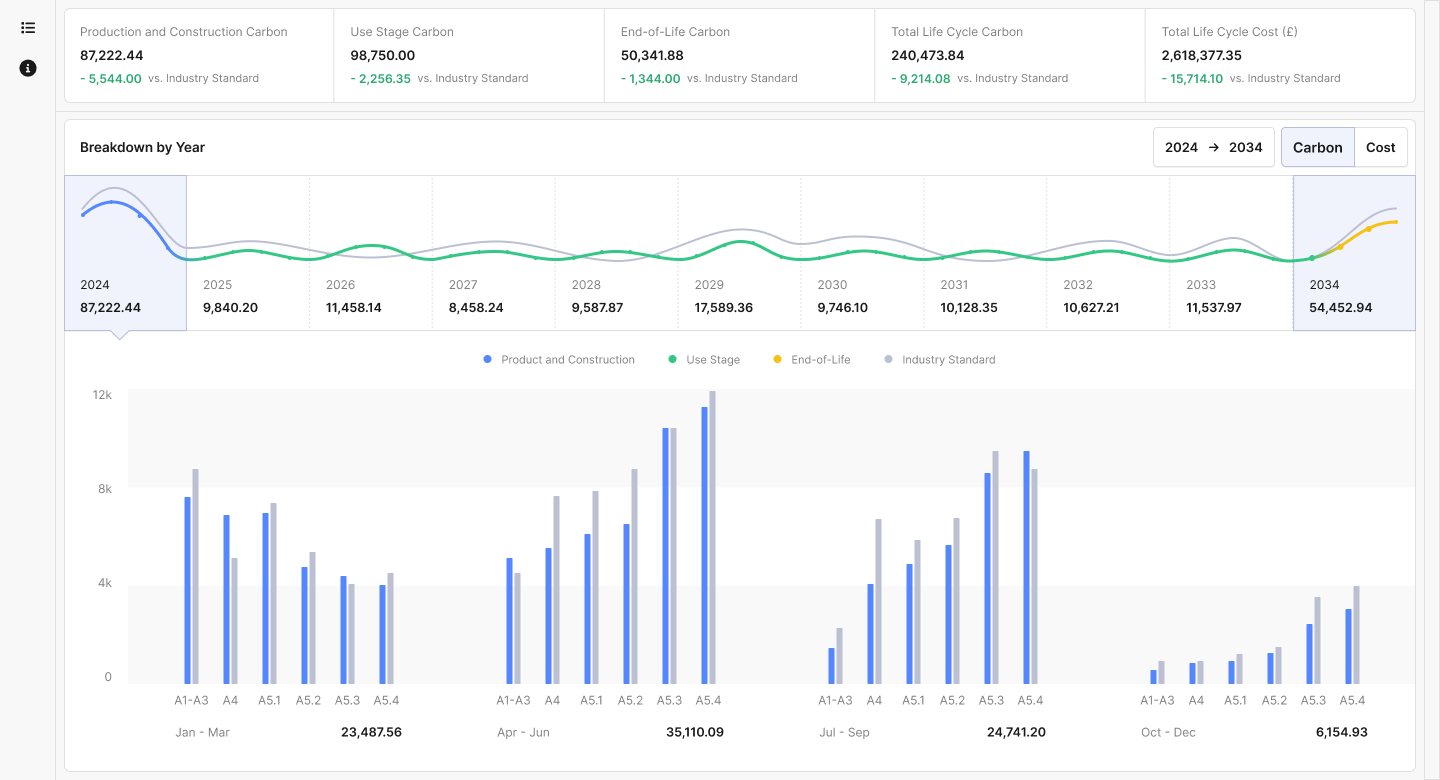
With that insight, Vigo audited the alpha interface and started rethinking its core screens. The priority was to show as much data as possible without losing clarity. That meant flexible, high-contrast, well-structured data tables.

The biggest source of frustration was the app locking up during large calculations. Vigo designed for background processing, with clear notifications so engineers could keep working while big tasks ran.

Everything was delivered as a React-based design system, so Benchmark’s developers could build and scale the new interface within their existing stack.

Team and process

Vigo’s team was a senior product strategist, lead UX and UI designers with additional design support, a producer and a senior front-end developer. Working directly with Benchmark’s developers meant every design was checked against technical constraints and performance needs before it was handed over.

Outcomes

Vigo delivered high-fidelity user flows, a React component library, prototypes of revised features for stakeholders to validate, and a performance-ready UI framework built to handle the large datasets estimating work depends on.

The redesigned carbon application gives estimating engineers a faster, more efficient tool, built for the way they actually work and the scale of the projects they manage.