Client: Catchbox
Sector: AV hardware, direct-to-consumer e-commerce
Location: Latvia, selling internationally
Services: discovery, UX design, rapid prototyping, Figma design system, 3D product assets
Platform: replaced a bespoke OpenCart build
Case Studies
Show all


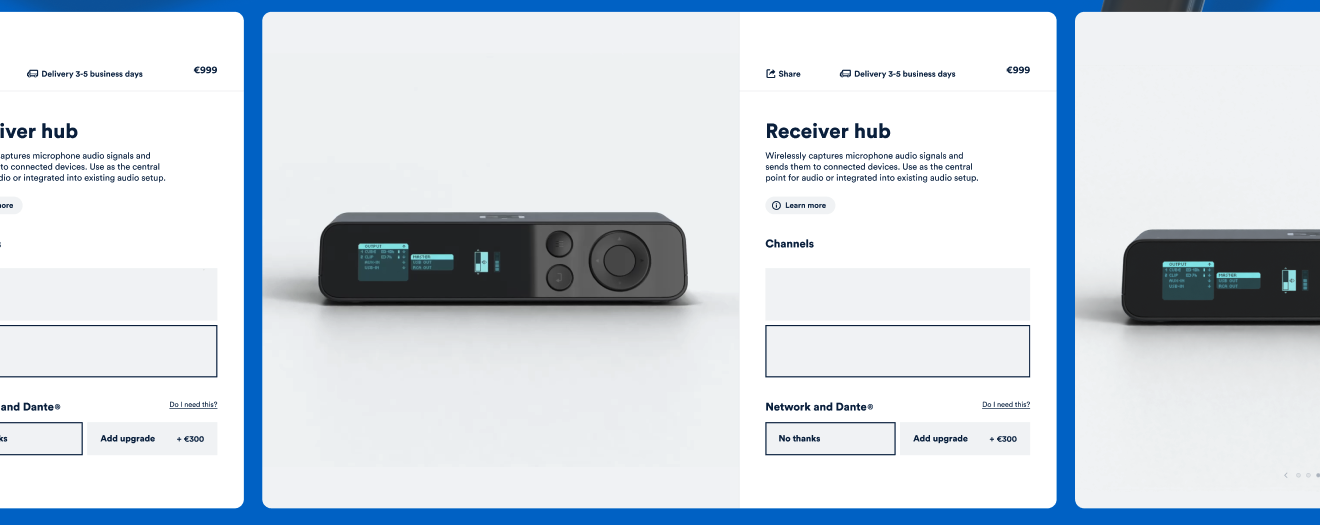
Catchbox: e-commerce for a complex product ecosystem
Client: Catchbox
Sector: AV hardware, direct-to-consumer e-commerce
Location: Latvia, selling internationally
Services: discovery, UX design, rapid prototyping, Figma design system, 3D product assets
Platform: replaced a bespoke OpenCart build
Summary
Vigo redesigned Catchbox's online buying experience so customers could understand and configure its full ecosystem of throwable microphones, base stations and accessories. Discovery included a factory visit and workshops in Latvia, and two prototypes were tested with users from broadcasting, AV and education. After launch, cart abandonment fell 26%, purchases took 9.58 seconds less to complete and average order value rose 14%.
Context and challenges
Catchbox is best known for its cuboid throwable microphone, used in conference halls, lecture theatres and classrooms. Around it sits a wider range: lapel microphones, base stations that connect several devices, digital processing add-ons and accessories from wireless chargers to secure storage.
Catchbox sells mainly direct to customers through its website, which distributor partners also use as a reference. Its bespoke OpenCart build was struggling to keep up. Customers couldn’t see how the products fitted together, so they bought incomplete set-ups or phoned and emailed support for help. Bundled product variations added to the confusion, and new launches were about to make it worse.
Catchbox needed a new buying experience that explained the whole ecosystem, let customers configure their own set-up and could grow with the product range.
Immersive discovery
Vigo started with a discovery phase in four parts:
Competitor research across direct AV rivals and companies that sell complex products well in other sectors, including automotive, IT and transport.
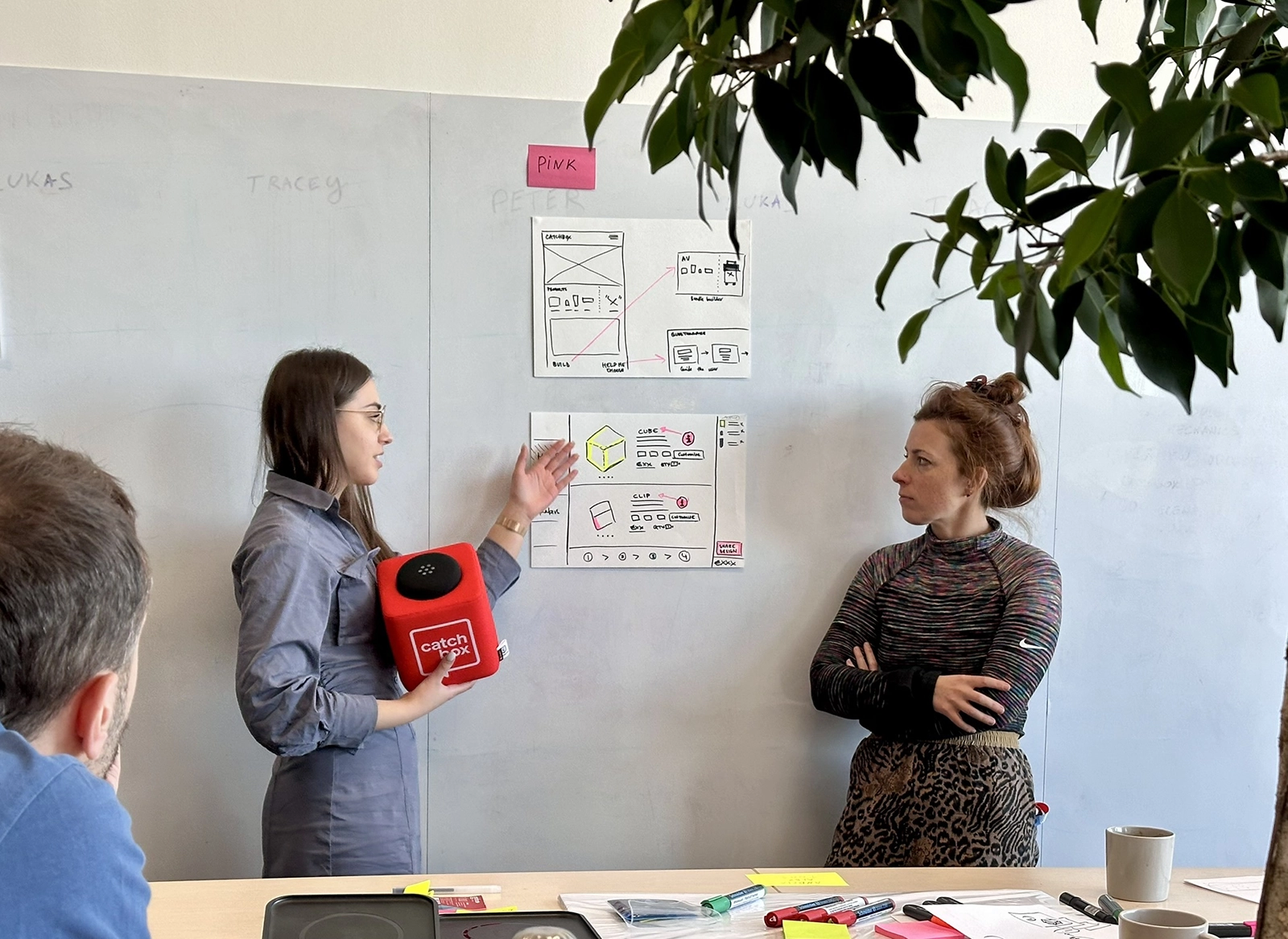
A visit to Catchbox’s factory in Latvia, so the team could handle and use every product.
Interviews with Catchbox staff, distributor partners and sales teams about what worked, what didn’t and their “one wish” for a new site.
Design thinking workshops on site in Latvia, where teams sketched ideas for “dynamic bundle selling” and refined them in competitive sessions.
Discovery changed the brief. The project was no longer a shop rebuild. It became a digital product in its own right, one that guides buyers to the right set-up rather than simply listing what’s for sale.
From concepts to configurable solutions
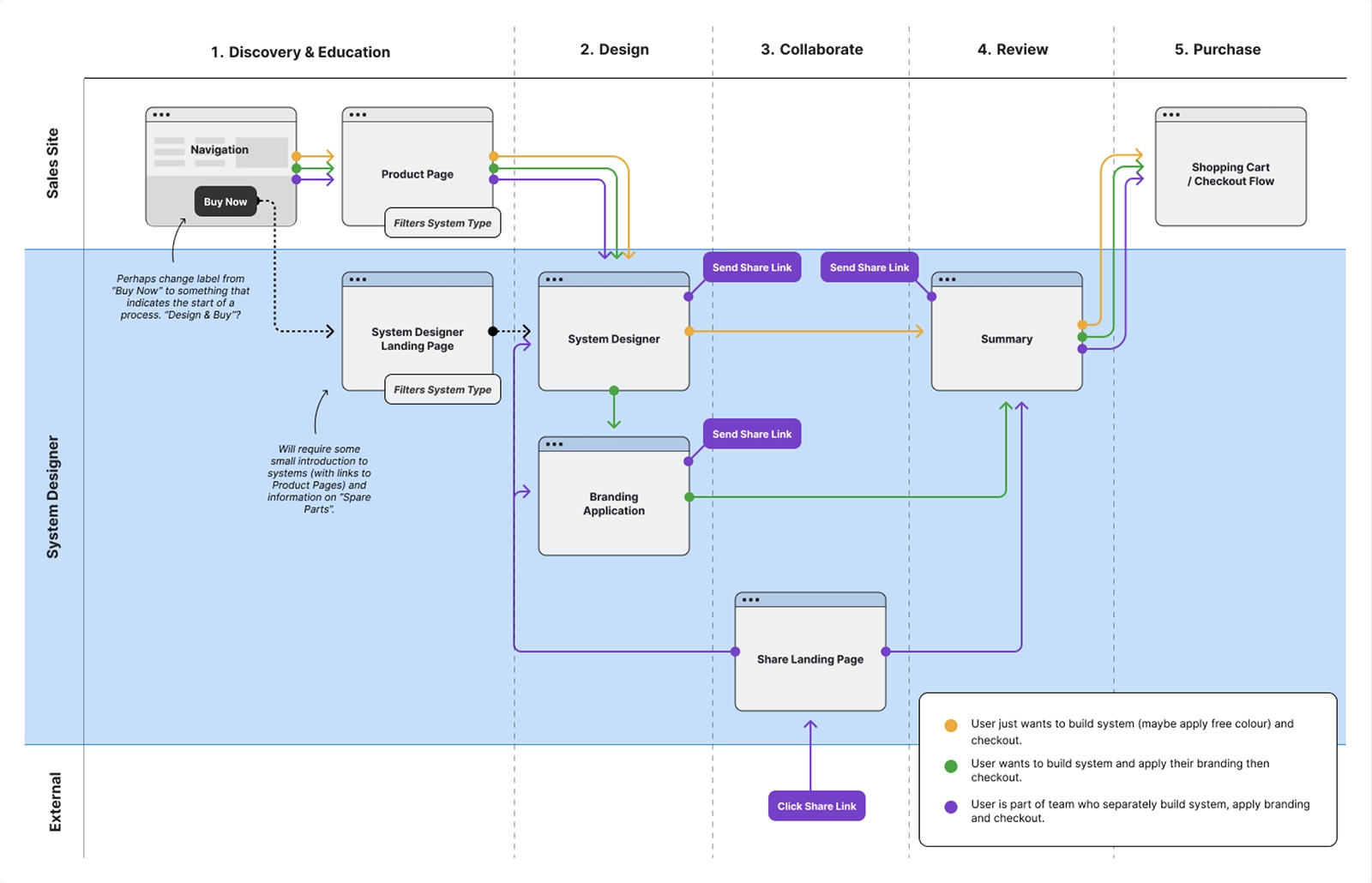
Back in the UK, the workshop sketches became rapid prototypes. Vigo built two distinct wireframe concepts and tested them head to head with a panel of users from broadcasting, AV and education. Session metrics and feedback clearly favoured one option, but Catchbox chose the other because it was a better fit for the brand. The data informed the decision, and the client still made it.
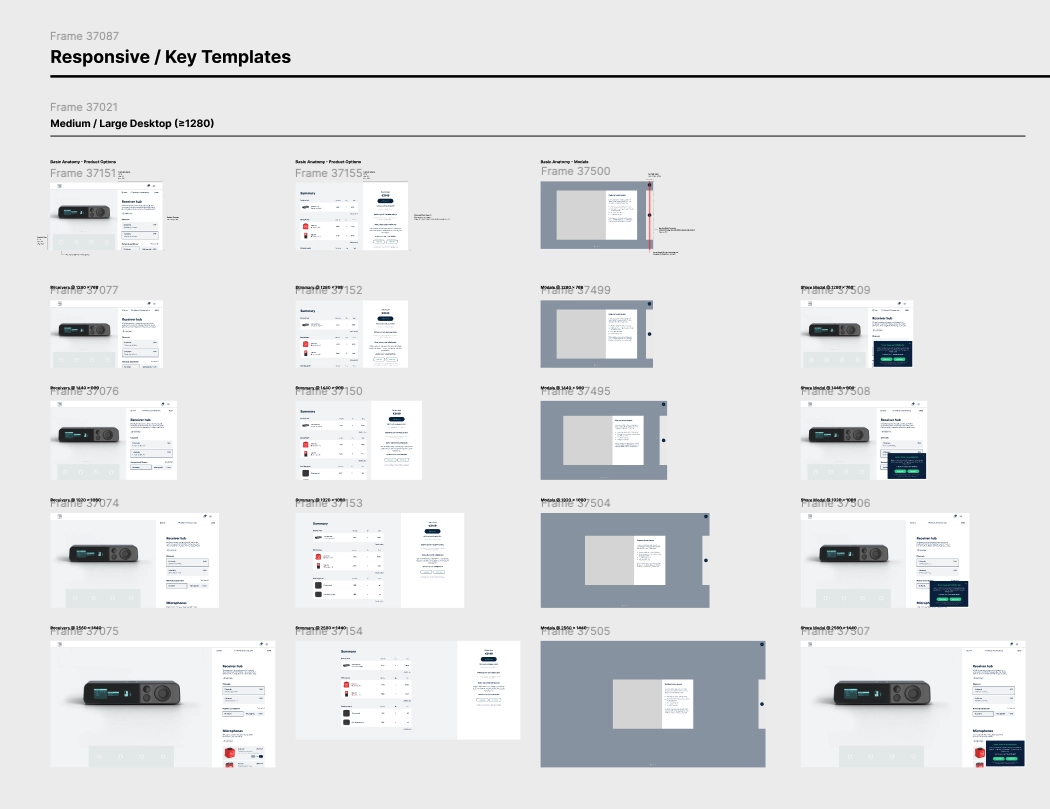
The chosen direction was developed into high-fidelity flows in Figma, built on a scalable component library so the experience would perform consistently across devices. As a direct-to-consumer business, Catchbox needed it to work especially well on mobile.
Unplanned but critical deliverables
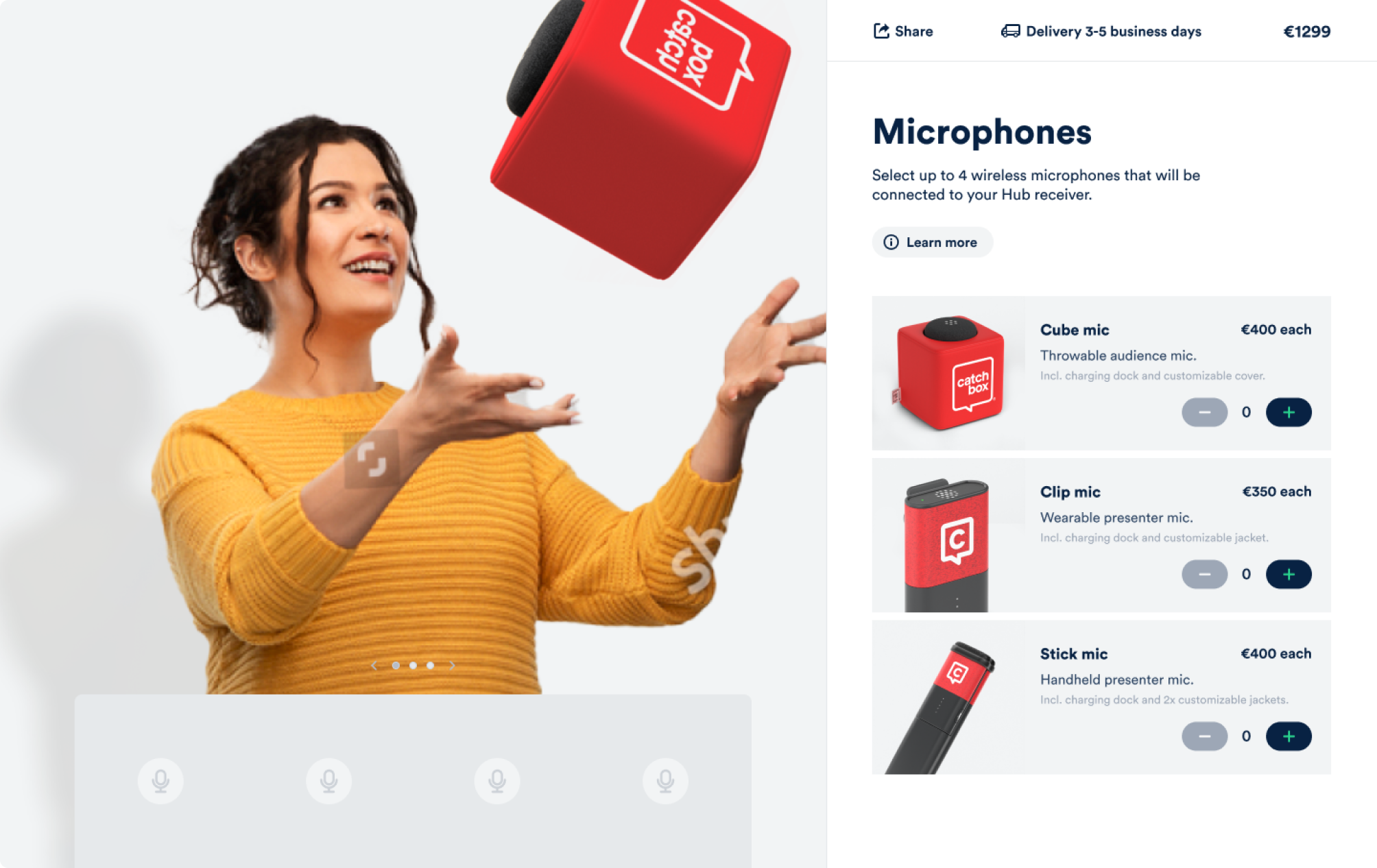
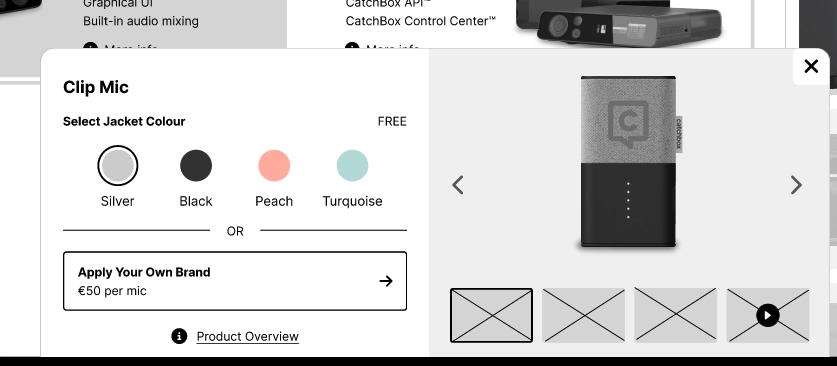
Testing showed that buyers wanted to see the effect of each customisation choice as they made it. Vigo produced high-quality 3D renders of every product. These let the configurator show realistic colour changes and apply a customer’s own branding to the hardware.
Outcomes
Vigo handed over production-ready Figma designs with a component library, a flexible UX flow for building complete set-ups, and 3D product assets for on-site customisation.
After launch, cart abandonment fell 26%. Completing a purchase took 9.58 seconds less, and average order value rose by 14% in the first 90 days vs previous year. The new site presents Catchbox’s range as premium and technically advanced. It also gives the product line room to grow without pushing customers towards the support team for help.
We use cookies for analytics and marketing. No data is shared with third parties.